Synesthesia and Psychedelics: Cross-Modal Sensory Experiences in Psychedelics and Beyond Synesthesia and psychedelics both reveal fascinating ways the brain can blend the senses. As a kid, I kept to myself. I was quiet, shy, introspective, and somehow hearing and tasting colors?! Well, yes, I did, and I still do. I now know that I have […]
Synesthesia and psychedelics both reveal fascinating ways the brain can blend the senses. As a kid, I kept to myself. I was quiet, shy, introspective, and somehow hearing and tasting colors?! Well, yes, I did, and I still do. I now know that I have a mild case of congenital synesthesia, but it wasn’t until my foray into the deeper science and meaning of psychedelic experiences that I began to understand this involuntary blending of my senses. Let’s explore why I play “purple” on the trumpet in jazz combos and why in my former career I designed beer recipes around the color burnt orange or cranberry when neither fruit was harmed in the process.
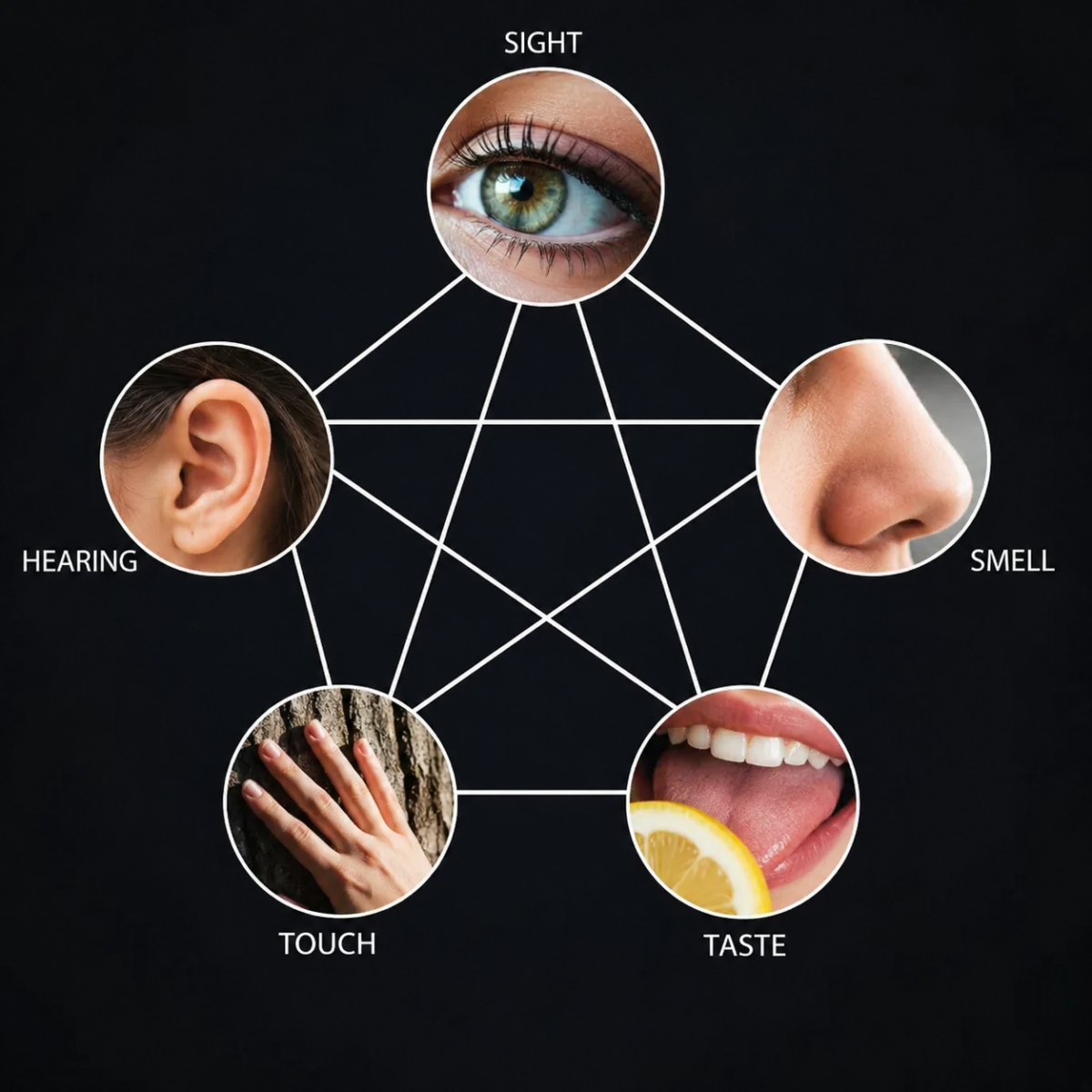
Synesthesia is a condition where sensory input creates additional experiences across different senses. This translates to just about any crossover between senses, like “hearing colors” or “seeing sounds.”
People are born with varying degrees of congenital synesthesia, myself included. In fact, research begun by V.S. Ramachandran and E.M. Hubbard has advanced the theory that infants may begin life with some form of cross-modal neural connectivity, but the vast majority of humans lose much of that connectivity during early brain development. I can say from experience that keeping a little cross-modality is not necessarily a bad thing. I have the solos and recipes to prove it.
During integration sessions, it is common to hit a wall when trying to explain experiences like synesthesia that exist far from the dimensions in which we lead our daily lives.
I think of synesthesia like literal translations of sayings from another language. My Cuban friends say “you make my mangoes snore” in Spanish when they are annoyed or frustrated. A statement that makes perfect sense to them, even though the literal translation sounds nonsensical and funny. In the same way, how do I really explain to someone that a bassline and my solo are both a very specific hue of purple?
In the psychonaut community, it is common to hear about synesthesia, though it may be described less scientifically, like saying a moving color orb smelled like a childhood memory. Scientists have been studying synesthesia by inducing psychedelic states for over 150 years. This research not only helps scientists understand synesthesia, but it also provides broader insight into perception and consciousness.
Studies have shown that auditory-visual synesthesia is the most commonly reported version under the influence of psychedelics. It has also been observed that congenital synesthesia often involves simpler pairings between senses, while psychedelically induced synesthesia can involve multiple overlapping sensory experiences at once.
Synesthesia is one of the many aspects of the psychedelic experience that is as fascinating as it is varied. By observing this type of brain activity, researchers are able to move closer to understanding conditions and processes that are more complex than current definitions allow. Experiences like synesthesia remind us how much we still do not fully understand about perception, cognition, and consciousness. Studying these experiences is part of a broader effort to understand how the human brain interprets reality.
Synesthesia offers a glimpse into how flexible and interconnected human perception can be. Whether it is present from birth or emerges during psychedelic experiences, it highlights the brain’s ability to blend senses in ways that challenge how we typically understand reality.
If you are currently struggling after a challenging psychedelic experience and do not want to wait for the rest of this series, you can explore support through AURA or book a free appointment with one of our psychedelic information specialists.
If you’re looking for personalized guidance and support before or after a psychedelic experience, the Unlimited Sciences Psychedelic Info Line offers free, 1:1 support for answering questions about psychedelic safety, integration, and emotional processing. You can also Chat with AURA AI, 24/7, for free.
No comment yet.
Join our email list and get immediate access to part one of our psilocybin guide. You’ll also get the latest in how we’re bridging the gap between science and soul: psychedelic research updates, real-world findings, community-driven education, personal stories and expert insights on natural medicine.
Advancing Real-World Psychedelic Research and Science-Backed Education
Unlimited Sciences is provided with a nonprofit status by fiscal sponsorship through Realm of Caring Foundation.
Federal EIN: 46-3371348.
© 2025 Unlimited Sciences. All Rights Reserved.
Designed by Gloss