Challenging Psychedelic Experiences Challenging Experiences Can Happen To Anyone Psychedelic experiences can be joyful, meaningful, and profound, but they can also become frightening, emotionally intense, or confusing. Understanding what challenging psychedelic experiences can look like and why they may happen is an important part of making informed decisions and developing realistic expectations. This part one […]
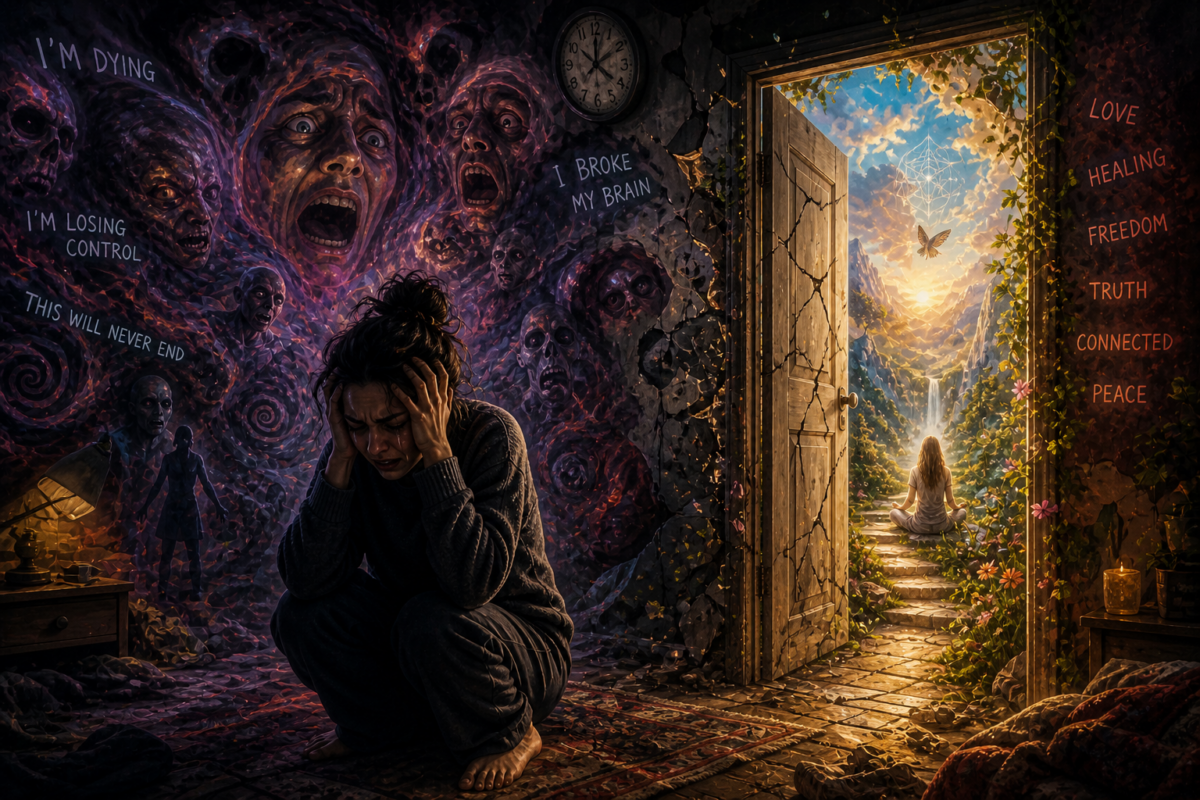
Psychedelic experiences can be joyful, meaningful, and profound, but they can also become frightening, emotionally intense, or confusing. Understanding what challenging psychedelic experiences can look like and why they may happen is an important part of making informed decisions and developing realistic expectations. This part one of a three part series.
A challenging psychedelic experience is any experience that feels overwhelming, frightening, emotionally painful, or difficult to navigate.
Many people use the phrase “bad trip,” but that phrase can sometimes miss the complexity of what is happening.
A challenging psychedelic experience may involve:
Research has found that nearly 39% of people who reported a difficult psilocybin experience described it as one of the five most challenging experiences of their life. At the same time, many later said the experience also had meaning or personal value. While some people later find meaning in a difficult experience, others continue to experience distress long after the acute effects have ended. It is important not to assume that every challenging experience is inherently beneficial or that suffering automatically leads to growth. Some experiences may require additional support, integration, or professional care to fully process.
Every person experiences psychedelics differently. Some people mainly feel emotional intensity. Others feel physical discomfort, spiritual confusion, or overwhelming thoughts.
A challenging psychedelic experience may feel like:
One of the most common experiences is intense fear.
A person may suddenly become convinced something terrible is happening. They may believe they are dying, having a medical emergency, trapped forever, or feel like they are not connecting to the real world. Even when the body is physically safe, the fear can feel completely real. People sometimes become frightened by how strong the experience feels. They may worry that they will never return to normal.
Some people get stuck in repetitive thoughts. These people may repeat the same sentence in their head over and over. They may feel like time has stopped. Then they may think they are reliving the same moment endlessly. Thought loops can be especially distressing because they can make a person feel trapped.
Examples may sound like:
Psychedelics can lower emotional defenses. This means old memories, grief, shame, or trauma may come to the surface. A person may suddenly remember childhood experiences, painful relationships, loss, neglect, fear, or moments they had tried not to think about for years. Sometimes these memories arise in pieces. Sometimes they come back with strong body sensations, emotions, or vivid imagery.
This can feel overwhelming, especially if the person was not prepared for it. While some individuals find it meaningful to revisit difficult experiences in supportive settings, the emergence of traumatic memories can also feel destabilizing and may benefit from professional support.
Some people experience ego dissolution, which can feel like losing their sense of self.
They may forget who they are, where they are, or what is happening. They may feel merged with everything around them or feel like their normal identity has disappeared.
For some people, this feels spiritual or peaceful. For others, it feels terrifying.
A person may think:
Not all challenging psychedelic experiences are emotional.
Some people experience:
Physical sensations can become more frightening if someone interprets them as dangerous.
For example, a racing heart may lead someone to believe they are having a medical emergency, even if the increased heart rate is temporary and not dangerous.
There is not always one reason.
A challenging psychedelic experience can be influenced by:
Although no psychedelic experience is entirely predictable, there are steps people can take to reduce the likelihood of a challenging experience becoming overwhelming. Learning about potential effects, preparing emotionally, choosing a safe environment, and having trusted support available can all contribute to a safer and more manageable experience.
This is why preparation and support matter so much. Set and setting are two of the biggest factors in whether someone feels safe during a psychedelic experience.
“Set” refers to mindset, including emotional state, expectations, fears, and mental health.
“Setting” refers to the environment, including the people present, noise level, physical space, lighting, and whether someone feels emotionally safe.
Some difficult experiences settle with time, rest, support, and integration.
Others may need more care.
A person may want additional support if they continue having:
It is important to know that a challenging psychedelic experience can sometimes uncover mental health concerns that were already present beneath the surface.
While uncommon, some individuals may continue to experience significant distress after the acute effects have ended, including persistent paranoia, symptoms of psychosis or mania, or difficulty functioning in daily life. These experiences should not be ignored and may warrant prompt medical or mental health evaluation.
Professional support can be especially helpful for people with trauma histories, severe anxiety, lingering distress, or concerns about changes in their thoughts, emotions, or behavior following a psychedelic experience.
A challenging psychedelic experience can involve fear, panic, grief, shame, trauma, physical discomfort, or feeling disconnected from yourself and the world around you.
These experiences can feel deeply overwhelming in the moment. They can also make more sense over time, especially when people have support and space to process what happened.
Part 2 of this series will focus on how people can reduce the risk of a challenging psychedelic experience by preparing carefully, choosing safer environments, and building a stronger support system before the experience begins.
If you’re looking for personalized guidance and support before or after a psychedelic experience, the Unlimited Sciences Psychedelic Info Line offers free, 1:1 support for answering questions about psychedelic safety, integration, and emotional processing. You can also Chat with AURA AI, 24/7, for free.
No comment yet.
Join our email list and get immediate access to part one of our psilocybin guide. You’ll also get the latest in how we’re bridging the gap between science and soul: psychedelic research updates, real-world findings, community-driven education, personal stories and expert insights on natural medicine.
Advancing Real-World Psychedelic Research and Science-Backed Education
Unlimited Sciences is provided with a nonprofit status by fiscal sponsorship through Realm of Caring Foundation.
Federal EIN: 46-3371348.
© 2025 Unlimited Sciences. All Rights Reserved.
Designed by Gloss