Ketamine, Esketamine, and Depression What Studies Show About Depression Explore what current research says about ketamine and esketamine for depression, including treatment-resistant depression. Learn how these treatments differ, what studies have found, and what safety considerations matter. Ketamine has become one of the most widely discussed developments in depression research. Once used primarily as an […]
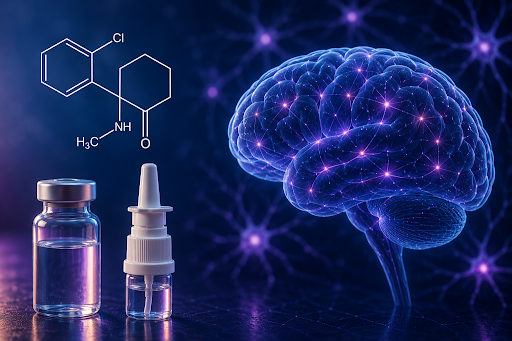
Explore what current research says about ketamine and esketamine for depression, including treatment-resistant depression. Learn how these treatments differ, what studies have found, and what safety considerations matter.
Ketamine has become one of the most widely discussed developments in depression research. Once used primarily as an anesthetic, researchers now study it for treatment-resistant depression, and clinicians sometimes prescribe it for this purpose. As research has expanded, public interest has grown as well. Many people still have questions about how ketamine works, how it differs from esketamine, and what the current evidence actually shows.
This guide summarizes the current evidence in clear, accessible language to help readers better understand ketamine research. It avoids claims that go beyond the available evidence. Ketamine-based treatments have shown promise for some individuals, but they are not appropriate for everyone. Researchers continue to study their long-term effectiveness, safety, and optimal use.
Ketamine was first synthesized in the 1960s as researchers searched for a safer alternative to phencyclidine (PCP), another anesthetic that produced prolonged recovery and unwanted psychological effects. After its approval in 1970, ketamine became widely used because it could provide anesthesia while generally preserving breathing and protective airway reflexes. Those characteristics continue to make it valuable in many emergency and surgical settings today.
Ketamine is a medication that has been used safely in medicine since the 1970s as an anesthetic. Today, it continues to be used in hospitals, emergency departments, operating rooms, veterinary medicine, and pain management.
Researchers later discovered that ketamine appeared to produce rapid antidepressant effects in some people with treatment-resistant depression, leading to extensive research into its psychiatric applications.
At the time, this finding challenged decades of depression research because most antidepressants targeted serotonin, while ketamine appeared to work through an entirely different biological pathway involving glutamate signaling.
Ketamine is sometimes referred to as racemic ketamine, meaning it contains two mirror-image forms of the same molecule:
Although these molecules contain the same atoms, they have slightly different three-dimensional structures. Those structural differences influence how they interact with receptors in the brain and may affect both their therapeutic effects and side effect profiles.
Today, only esketamine has received approval from the U.S. Food and Drug Administration (FDA) for certain psychiatric indications. Racemic ketamine is sometimes prescribed off-label for depression by qualified healthcare providers.
Most people diagnosed with depression experience improvement with psychotherapy, medication, lifestyle changes, or a combination of approaches. However, not everyone responds to initial treatment.
Treatment-resistant depression (TRD) generally refers to depression that has not adequately responded after at least two antidepressant medications taken at appropriate doses for an appropriate length of time.
People living with TRD often experience persistent symptoms that significantly affect daily functioning and quality of life. This unmet need has driven researchers to investigate treatments that act through biological pathways distinct from those of conventional antidepressants.
Although the names sound similar, ketamine and esketamine are not identical.
Ketamine contains both R- and S-ketamine molecules.
Esketamine contains only the S-ketamine molecule and is administered as a nasal spray under medical supervision. It was approved by the FDA for adults with treatment-resistant depression when used as monotherapy or alongside an oral antidepressant.
Researchers continue to study whether R-ketamine may offer different benefits or side effect profiles, but it has not yet received regulatory approval for treating depression.
Traditional antidepressants primarily influence serotonin, norepinephrine, or dopamine signaling.
Ketamine appears to work differently.
Rather than primarily targeting serotonin, ketamine blocks N-methyl-D-aspartate (NMDA) receptors, which are involved in glutamate signaling. Glutamate is the brain’s most abundant excitatory neurotransmitter and plays an important role in learning, memory, and communication between neurons.
Current evidence suggests ketamine’s antidepressant effects likely involve a cascade of biological changes rather than a single mechanism. Research suggests these changes may include:
Researchers are still working to understand exactly which mechanisms are most responsible for ketamine’s clinical effects.
Early clinical trials found that intravenous ketamine could reduce depressive symptoms within hours or days for some people with treatment-resistant depression.
More recent studies have expanded on these findings and helped researchers better understand who may benefit, how long improvements last, and how treatment may fit into longer-term care.
One important study, the ESCAPE-TRD trial, compared esketamine nasal spray with quetiapine extended release in adults with treatment-resistant depression.
A 2026 analysis of participants from this study examined how symptom improvement changed over time. Researchers found that many people who showed meaningful improvement during the first month of treatment later achieved remission in subsequent months. However, improvement did not occur at the same pace for everyone.
These findings suggest that early response may provide useful information about future outcomes, while also indicating that some people continue to improve beyond the first few weeks of treatment.
Like all clinical research, this study has limitations. The researchers conducted a secondary analysis and treated several findings as exploratory. The manufacturer of esketamine also funded the study. These factors do not invalidate the results, but readers should keep them in mind when interpreting the evidence.
The first randomized controlled trial demonstrating rapid antidepressant effects after a single intravenous ketamine infusion marked a turning point in depression research. Although the study was small, it challenged the long-standing belief that antidepressants necessarily required weeks to produce improvement and helped launch more than two decades of ketamine research.
Ketamine-based treatments can produce temporary changes in perception, thinking, blood pressure, and coordination.
For this reason, clinicians administer FDA-approved esketamine under medical supervision through a Risk Evaluation and Mitigation Strategy (REMS) program in the United States. After each treatment, the clinical team monitors patients before they leave the clinic.
Clinicians may also use racemic ketamine in medical settings, although practices vary depending on local regulations, the clinical setting, and the condition they are treating.
Like many medical treatments, ketamine involves potential benefits as well as potential risks. A qualified healthcare professional can help determine whether it may be appropriate for an individual’s specific medical history and circumstances.
FDA-approved esketamine also carries a boxed warning regarding sedation, dissociation, respiratory depression, potential misuse, and suicidal thoughts and behaviors, which is one reason it is available only through the REMS program.
Although ketamine research has advanced rapidly, important questions remain.
Researchers continue to investigate:
Continued research will help answer these questions over time.
If you are currently struggling after a challenging psychedelic experience and do not want to wait for the rest of this series, you can explore support through AURA or book a free appointment with one of our psychedelic information specialists.
Ketamine has changed how researchers think about treating depression by demonstrating that rapid antidepressant effects may be possible through biological pathways beyond traditional antidepressants.
At the same time, ketamine is not a cure for depression, and it does not produce the same results for everyone. Current evidence supports cautious optimism alongside continued research. Understanding both what the science shows and what remains uncertain helps people make more informed decisions in partnership with qualified healthcare professionals.
For many people, ketamine treatment is only one component of care. Depending on an individual’s needs, healthcare professionals may recommend combining treatment with psychotherapy, ongoing psychiatric care, lifestyle interventions, or other evidence-based approaches.
Is ketamine FDA approved for depression?
Not exactly. The FDA has approved racemic ketamine as an anesthetic and esketamine nasal spray for certain adults with treatment-resistant depression.
How quickly does ketamine work?
Some people experience improvement within hours or days, while others improve more gradually or do not respond. Individual responses vary considerably.
Is ketamine the same as esketamine?
No. Racemic ketamine contains both R-ketamine and S-ketamine, while esketamine contains only the S-ketamine molecule.
Can anyone receive ketamine treatment?
No. A qualified healthcare professional should determine whether ketamine is appropriate based on an individual’s medical history, current medications, and treatment goals.
This is Part 1 of an eight-part series exploring ketamine and esketamine. Stay tuned for upcoming blogs covering how ketamine works in the brain, ketamine vs. esketamine, treatment-resistant depression, R-ketamine, safety and side effects, FDA approval, and what major clinical studies can teach us about ketamine-based treatments.
If you’re looking for personalized guidance and support before or after a psychedelic experience, the Unlimited Sciences Psychedelic Info Line offers free, 1:1 support for answering questions about psychedelic safety, integration, and emotional processing. You can also Chat with AURA AI, 24/7, for free.
No comment yet.
Join our email list and get immediate access to part one of our psilocybin guide. You’ll also get the latest in how we’re bridging the gap between science and soul: psychedelic research updates, real-world findings, community-driven education, personal stories and expert insights on natural medicine.
Advancing Real-World Psychedelic Research and Science-Backed Education
Unlimited Sciences is provided with a nonprofit status by fiscal sponsorship through Realm of Caring Foundation.
Federal EIN: 46-3371348.
© 2025 Unlimited Sciences. All Rights Reserved.
Designed by Gloss