Recreational vs. Intentional:What are the differences? What are the differences between recreational and intentional use of psychedelics? This 3-part series explores the key differences between recreational and intentional psychedelic use. While these distinctions are expansive, we focus here on three core areas we regularly address at Unlimited Sciences: Goals , Set & Setting, and Integration. […]
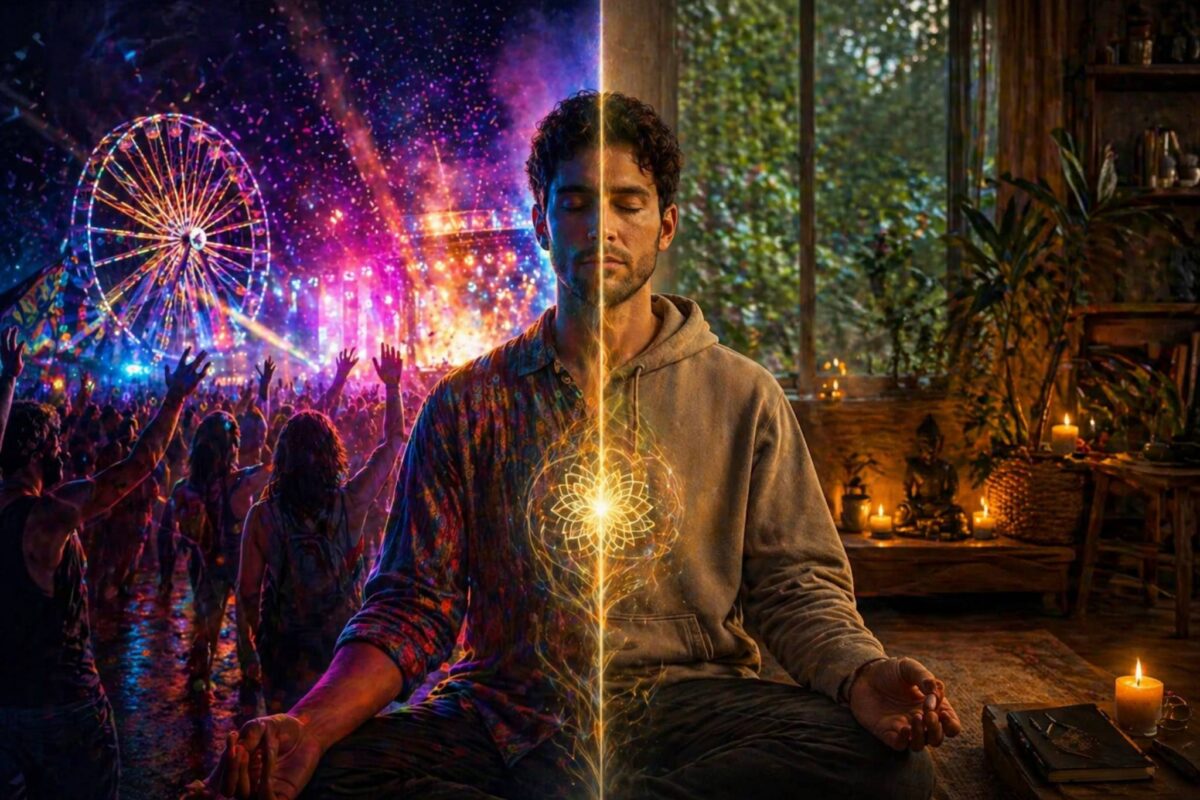
This 3-part series explores the key differences between recreational and intentional psychedelic use. While these distinctions are expansive, we focus here on three core areas we regularly address at Unlimited Sciences: Goals , Set & Setting, and Integration.
Of the many effects psychedelics can bring to the human experience, the augmentation of the five senses is one of the most common reasons they are used in recreational settings. Creators and observers alike have long found this sensory enhancement to be enjoyable, inspiring, and exploratory.
Not all psychedelic experiences are the same, either between individuals or from one experience to the next. One of the most widely reported phenomena is synesthesia, when stimulation of one sense automatically and involuntarily triggers perception in another, such as hearing colors or seeing sounds.
The expectation of these altered sensory states often shapes recreational use, placing it in environments like live music, art spaces, or immersive natural settings.
Overall, recreational use is often chosen to step outside of ordinary perception. It creates space for detachment from routine patterns, offering a temporary shift in how the world is felt and interpreted.
When approached intentionally, psychedelics can open access to emotional and psychological depth that is not easily available in ordinary states of consciousness.
Intentional use is often supported by experienced facilitators who establish structure, expectations, and goals for the session. Rather than focusing on sensory amplification, this approach emphasizes internal exploration, allowing individuals to form new connections between thoughts, emotions, behaviors, and lived experiences.
While phenomena like synesthesia may still arise, they are not the focus. Instead, the experience becomes a tool for reframing perspective and uncovering insight.
One commonly reported aspect of intentional use is a shift in the perception of time. Without the usual constraints of linear time, individuals may process memories, patterns, and emotions in ways that feel immediate and cohesive, often leading to meaningful insight.
Overall, intentional use is grounded in reflection, emotional openness, and nervous system awareness. It begins with clearly defined goals and is followed by integration, where insights are translated into lasting change.
How someone approaches a psychedelic experience often shapes what they take from it. Without clear intent, meaningful insights can be missed or misunderstood. With intention, the same substances can become tools for reflection, growth, and lasting change. Understanding this distinction helps individuals make more informed, safer, and more aligned decisions.
We don’t condone or look down upon any individual’s approach or goals for their experience with psychedelics. At Unlimited Sciences, our mission is strictly to provide science-backed education and experience-backed guidance to all levels of familiarity in the use of psychedelics.
Safety is a non-negotiable regardless of the intent or approach to using psychedelics.
Definitions
Goals: Intent and desired outcomes of a psychedelic experience.
Stay tuned for our second installment of this 3 part series…
If you’re looking for personalized guidance and support before or after a psychedelic experience, the Unlimited Sciences Psychedelic Info Line offers free, 1:1 support for answering questions about psychedelic safety, integration, and emotional processing. You can also Chat with AURA AI, 24/7, for free.
No comment yet.
Join our email list and get immediate access to part one of our psilocybin guide. You’ll also get the latest in how we’re bridging the gap between science and soul: psychedelic research updates, real-world findings, community-driven education, personal stories and expert insights on natural medicine.
Advancing Real-World Psychedelic Research and Science-Backed Education
Unlimited Sciences is provided with a nonprofit status by fiscal sponsorship through Realm of Caring Foundation.
Federal EIN: 46-3371348.
© 2025 Unlimited Sciences. All Rights Reserved.
Designed by Gloss